Rolfing® Structural Integration in Plymouth, Michigan | Wise Body Solutions
Structural Bodywork  ·  Plymouth, MI

Rolfing® Structural Integration in Plymouth, Michigan

You've treated the pain. This works on what keeps producing it.

No movement screening required to begin. Book a single session directly, or start a coordinated care plan with a movement screening — both paths are available here.

218 S. Main Street  ·  Plymouth, MI 48170

What Rolfing® Is

A specific method for how
your body holds itself.

Most people have never heard of Rolfing. Some have — and picture something painful, obscure, or reserved for a specific type of person. Neither picture is accurate.

Rolfing Structural Integration is a hands-on method developed by Dr. Ida Rolf, a biochemist who spent decades studying how the body relates to gravity — and what happens when that relationship goes wrong. It works with the body's fascial system to reorganize how structure is distributed throughout the body — not by reshaping tissue, but by changing what the nervous system is doing with it.

Practitioners are formally certified through the Dr. Ida Rolf Institute. Rolfing is a registered trademark — a discrete method with a specific mechanism, not a technique layered onto another modality.

Developer Dr. Ida Rolf, biochemist. Decades of research on how the body organizes itself in relation to gravity.
Method Hands-on work with the fascial system. Specific, sustained contact — not broad or rhythmic like massage.
Mechanism Sensory input to the fascia creates nervous system updates. The touch initiates it. The nervous system completes it.
Goal Reorganize how structure is distributed through the body — addressing the layer that holds compensation patterns.
Certification Practitioners are formally certified through the Dr. Ida Rolf Institute. It is not a technique layered onto massage or PT.
What Makes It Distinct

Rolfing is trained and certified through the Dr. Ida Rolf Institute. Its mechanism is neurological — specific, sustained fascial input that updates the nervous system's organization of structure. The session experience is closer to the compare card above than to anything you've felt in a massage or adjustment. Understanding that distinction is how you know whether it fits your situation.

Two Paths. One Clinic.

Book a Session. Or Start a Care Plan. You Decide.

You don't need a movement assessment to book a Rolfing session at WBS. You can schedule directly and receive a session with a brief intake to make sure it is right for you. If you want a coordinated care plan that integrates Rolfing with movement and other clinical work, that is where a movement assessment becomes essential. Both paths are available here. Only one requires a screening.

Path One  ·  No Screening Required
Book a Session Directly

Schedule directly. A brief intake ensures Rolfing is appropriate for you. Your session is built around what you bring that day.

$175 / single session · $154 / session in a 10-session series (10% off) · 90 minutes · Follow-up email support included between sessions.

Path Two  ·  Digital Movement Assessment Required
Start a Coordinated Care Plan

A Digital Movement Assessment gives us the data to integrate Rolfing with Clinical Pilates, Physical Therapy, or other clinical work. Rolfing runs better alongside a plan that knows what it's building toward.

Recommended for complex or recurring presentations.

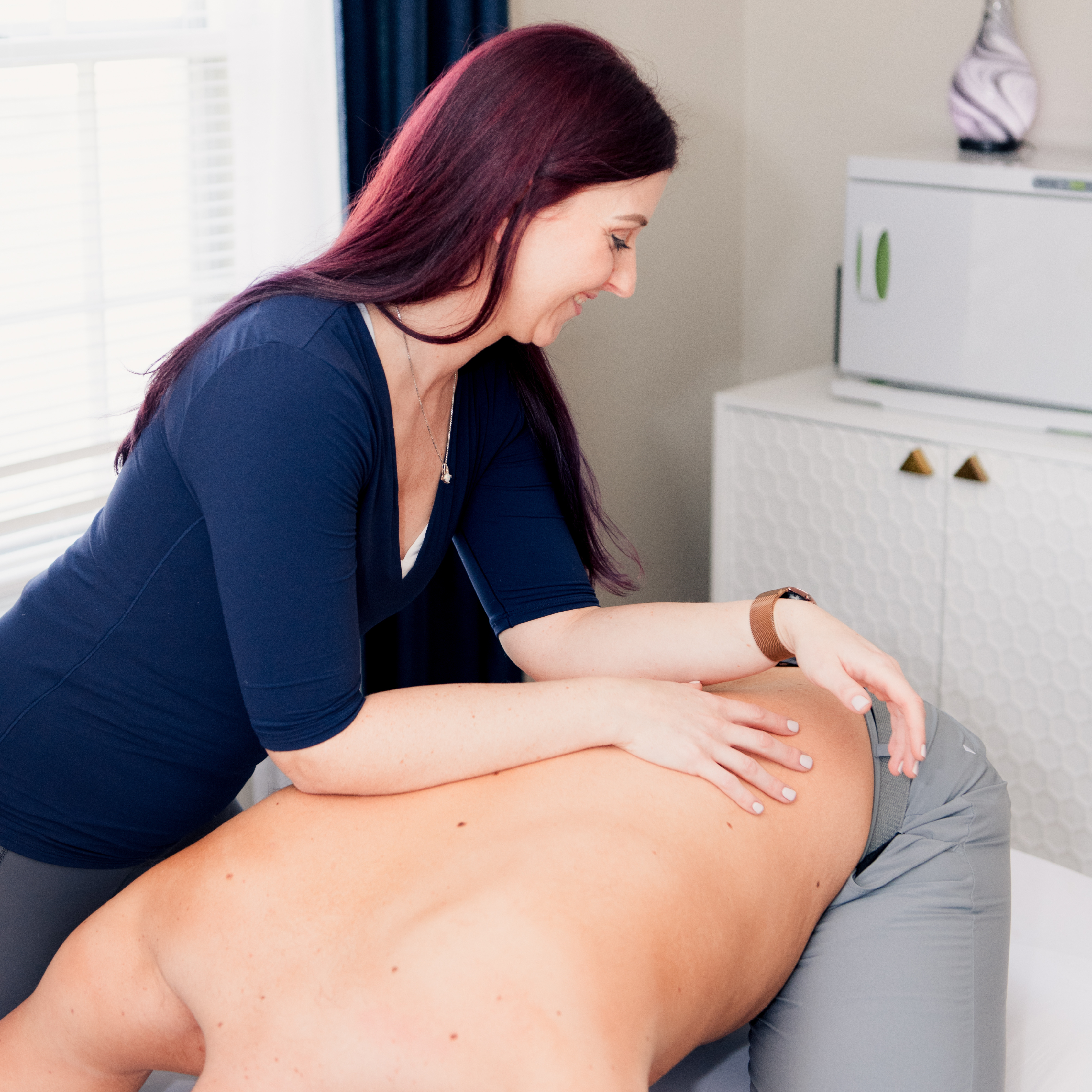
Kristin — Certified Rolfer and founder of Wise Body Solutions
The Practitioner
Kristin
Certified Rolfer · Founder, Wise Body Solutions

Kristin came to Rolfing not as a practitioner first, but as a patient. After two surgeries before she turned seventeen — and years of being told her body was limited, flawed, and unlikely to change — her first Rolfing session rewrote that story entirely.

She built WBS around the integration she always knew was possible: structural work that creates access, movement that builds on it, and a clinical environment that measures both. Rolfing is the method she returned to again and again as the piece that makes everything else work.

Certified Rolfer (Dr. Ida Rolf Institute)  ·  Clinical Pilates Instructor
Licensed Massage Therapist  ·  Expert Witness, State of Michigan
What Fascia Is — And Why It Matters

Your body's most pervasive
sensory organ.

To understand what Rolfing does, you need to understand fascia.

Fascia is the web of connective tissue that surrounds and connects every muscle, bone, organ, and nerve in your body. For a long time it was dismissed as simple packing material — the stuff anatomists cleared away to get to the interesting parts.

Research by anatomist Carla Stecco and researcher Robert Schleip changed that picture entirely. Fascia is not passive. It is not inert. It is one of the most richly innervated tissues in the body — and it plays a central role in how you feel, move, and organize yourself in space.

6–10×

More sensory receptors than muscle. Fascia contains far more proprioceptive and nociceptive nerve endings than the muscle it surrounds.

Mechanoreceptors throughout. Fascia detects stretch, pressure, and vibration — contributing directly to your sense of where you are in space.

Rich in free nerve endings. These contribute to interoception — the felt sense of your body from the inside. Pain that has no structural explanation often originates here.
Fascia is your body's most pervasive sensory organ. It is not packaging. It is the system through which your body knows itself.

Hyaluronan — The Lubricant You've Never Heard Of

Densification.

Within the fascial layers lives a substance called hyaluronan — a molecule that acts as a lubricant, allowing layers of fascia to glide smoothly as you move. When the body is moving well, hyaluronan is produced, recycled, and keeps things fluid.

When the body is under chronic stress, injury, or prolonged immobility, hyaluronan changes. It clumps into long chain molecules that become thick and sticky. Fascial layers lose their glide. This is called densification.

01 →

Densification occurs. Sensory nerves in the area get compressed and irritated.

02 →

Compressed nerves send pain signals to the brain. The brain reads the area as threatened.

03 →

The brain tells the body to guard and avoid the area. Movement decreases.

04 →

Less movement accelerates densification. The cycle compounds — without your awareness or permission.

Here is the part that matters most: none of this happens with your knowledge or consent.

Postural compensation is managed by the brainstem, cerebellum, and spinal cord — not the thinking brain. Your nervous system shifts load, adjusts movement patterns, and guards restricted areas automatically, below the threshold of conscious awareness. That is useful in the short term — it keeps you functional when something hurts.

The problem is that the same system that created the compensation cannot simply choose to undo it. The pattern becomes the new baseline. The nervous system treats it as normal. And over time, you lose access to the original — not through injury, but through adaptation. This is why chronic stiffness and recurring pain persist even when nothing shows up on imaging.

This is the layer other approaches work around.

No referral required. Book a session directly and start there.

How Rolfing Creates Change

The touch initiates it.
The nervous system completes it.

Here is what most people get wrong about how Rolfing works: it is not mechanical. Rolfing does not push tissue into a new shape. The fascia is the target — but the mechanism is the nervous system.

Specific, intentional pressure applied to fascial areas sends new sensory information to the brain. The nervous system updates its picture of what that area is doing — what it has been holding, how long it has been guarding, and whether it is safe to release. That update is what creates reorganization.

Input

Deliberate, sustained contact is applied to a specific fascial area — slow and specific, not broad or rhythmic.

Signal

New sensory information travels from the mechanoreceptors in fascia to the brain — updating the nervous system's map of that area.

Update

The nervous system revises what it has been holding, guarding, and organizing — and releases the pattern it no longer needs to maintain.

Result

Reorganization. Not a momentary release — a registered, remembered update to how the body organizes that area.

The fascia is the target. The nervous system is the mechanism. The change happens because the brain updates its picture — not because tissue was pushed into a new position.

The Rolfing Mechanism
What a Session Actually Feels Like

Slow, specific, and sustained.
You are part of the process.

Massage
Broad, flowing, rhythmic.

Wide coverage, continuous movement, designed for systemic relaxation. Pressure varies but rarely stays fixed on one point for long. You receive it passively.

Rolfing
Slow, specific, and sustained.

The practitioner applies deliberate pressure with a sense of stretch or traction — not to force a change, but to hold space for the nervous system to register one. You are actively involved throughout.

During a session, you may be asked to take a breath into a specific area. To slowly move a limb while pressure is held. To notice what you feel — and to notice what has shifted.

This is not performance. It is you actively encoding the change your nervous system is making.

Why Your Participation Matters

Awareness directed toward what has shifted helps the brain create a new pattern — not just a momentary release, but a registered, remembered reorganization. That is somatic awareness in its most direct form. And it is part of why Rolfing changes things that other approaches don't reach.

No referral. No screening required.

Book a single session directly and we handle the intake from there.

Where Rolfing Works Best

If any of these sound familiar,
this is worth your attention.

  • "I've tried multiple things. Relief never holds."

    That is not a failure of treatment. It is evidence the structural basis has not been addressed. When the pattern returns regardless of what you do to it, the question is what is organizing the pattern.

  • "I'm told to strengthen, but it doesn't help."

    If the nervous system is organizing a postural pattern, strengthening into it makes you stronger in that pattern — not better organized. Structural work first. Load after.

  • "Something feels off. Not painful, just inefficient."

    People who move well but sense asymmetry, excess effort, or a quality of movement that doesn't match their output. That sense is usually accurate. Rolfing addresses the organization behind it.

  • "My body carries a long history."

    Injuries, surgeries, years at a desk, decades of a sport or a trade. Fascia is the tissue that holds that history — adapting, compensating, layering. Rolfing works in that layer directly.

  • "My movement work isn't producing the results I expect."

    When structural access limits what movement can build, the gap isn't in your effort or your program. It's in the layer underneath. That's the piece Rolfing addresses — and what it opens up for everything else.

  • "I want to understand my body differently."

    Some people come to Rolfing not with a complaint, but with curiosity. The somatic awareness that develops across a series — noticing how you hold, respond, and inhabit your body — is its own kind of result.

★★★★★

"I didn't completely understand what Rolfing was when I started. Having completed the full series, I can say it is a total mind-body health journey. Kristin is an amazing practitioner. She is the mind-body whisperer. I totally recommend if you are in pain or just looking for a life boost."

Tom — Google Review

Sound like your situation?

Book a session directly — or start with a Digital Movement Assessment to build a full plan around it.

How It Fits the WBS System

Rolfing is central to the WBS methodology.
Not a supplement to it.

Where Rolfing Doesn't Belong First
Acute Injury & Medical Treatment

Rolfing does not replace physical therapy or treat acute injury. If you are in an acute phase — recent trauma, post-surgical, or managing an active inflammatory process — clinical intervention belongs first.

What Nothing Else Quite Reaches
The Structural Layer

The layer that holds compensation patterns after the original injury heals. The layer that limits what PT and Pilates can build on. When this layer is addressed, what becomes possible in everything else changes.

When Rolfing runs alongside Clinical Pilates, the structural work opens access that the movement practice builds into. Structural reorganization creates the substrate. Pilates trains the motor patterns on top of it. The results are different from what either produces alone.

When Rolfing runs alongside Physical Therapy, the two address different layers of the same problem. PT works on function, strength, and recovery. Rolfing works on the structural organization that function is built from. Layered together, the outcomes are compounding.

With Clinical Pilates

Structural work opens access. Pilates builds into it. Where you start in Pilates changes when structural compensation has been addressed first.

With Physical Therapy

PT addresses function and recovery. Rolfing addresses structural organization. Together they work different layers of the same problem — and the results compound.

Alone

Rolfing produces change by itself. A coordinated plan produces more. Your assessment tells us which picture fits your situation.

For clients whose assessment indicates it, Rolfing is often the piece that makes everything else work — not because the other services are insufficient, but because the layer Rolfing addresses is the one they build on.

Book a Rolfing Session

Schedule directly below.
No screening required.

Select a date and time that works for you. A brief intake at your first session confirms Rolfing is the right fit and gives us a starting point.

Note →

Rolfing appointments at WBS book several weeks to months in advance. The structural and movement work compound each other — starting movement work while you wait for your Rolfing window makes both more effective.

Can't Wait? Start Now.

A Digital Movement Assessment is available now — no wait.

It gives us the clinical data to build your coordinated plan, keeps you active in the system, and means your first Rolfing session picks up where the assessment left off — not from scratch.

Schedule a Digital Movement Assessment →
★★★★★

"Kristin is not only incredibly knowledgeable, but also incredibly effective. I have never experienced this kind of work before and I am already experiencing a big difference in my hip and neck. Her approach is professional and her office is comforting. Highly recommended."

Dr. Kyle — Google Review
Not Ready to Book Yet?

Stay on the list.

Rolfing appointments at WBS book ahead. Leave your information and we'll reach out when a window opens — or when we have something relevant for your situation.

No Screening Required

Ready to book
a session?

Schedule directly. A brief intake ensures it's the right fit. No movement assessment required.

Book a Session →

Questions first? Email the clinic.

Coordinated Care

Want a plan
that goes deeper?

A movement screening gives us the data to integrate Rolfing with everything else your body needs.

Schedule Movement Screening →

218 S. Main Street  ·  Plymouth, MI 48170

Scroll to Top