Clinical Pilates in Plymouth, Michigan | Wise Body Solutions
Clinical Movement Studio  ·  Plymouth, MI

Clinical Pilates in Plymouth, Michigan

Moving and moving well are two different things.

Most exercise builds muscle. Clinical Pilates trains how you coordinate movement — whether you're managing pain or chasing performance.

218 S. Main Street  ·  Plymouth, MI 48170

What Clinical Pilates Is

A structured practice.
A specific goal.

Clinical Pilates is a structured movement practice. It uses breath, awareness, motor control, and progressive load to change how your body moves.

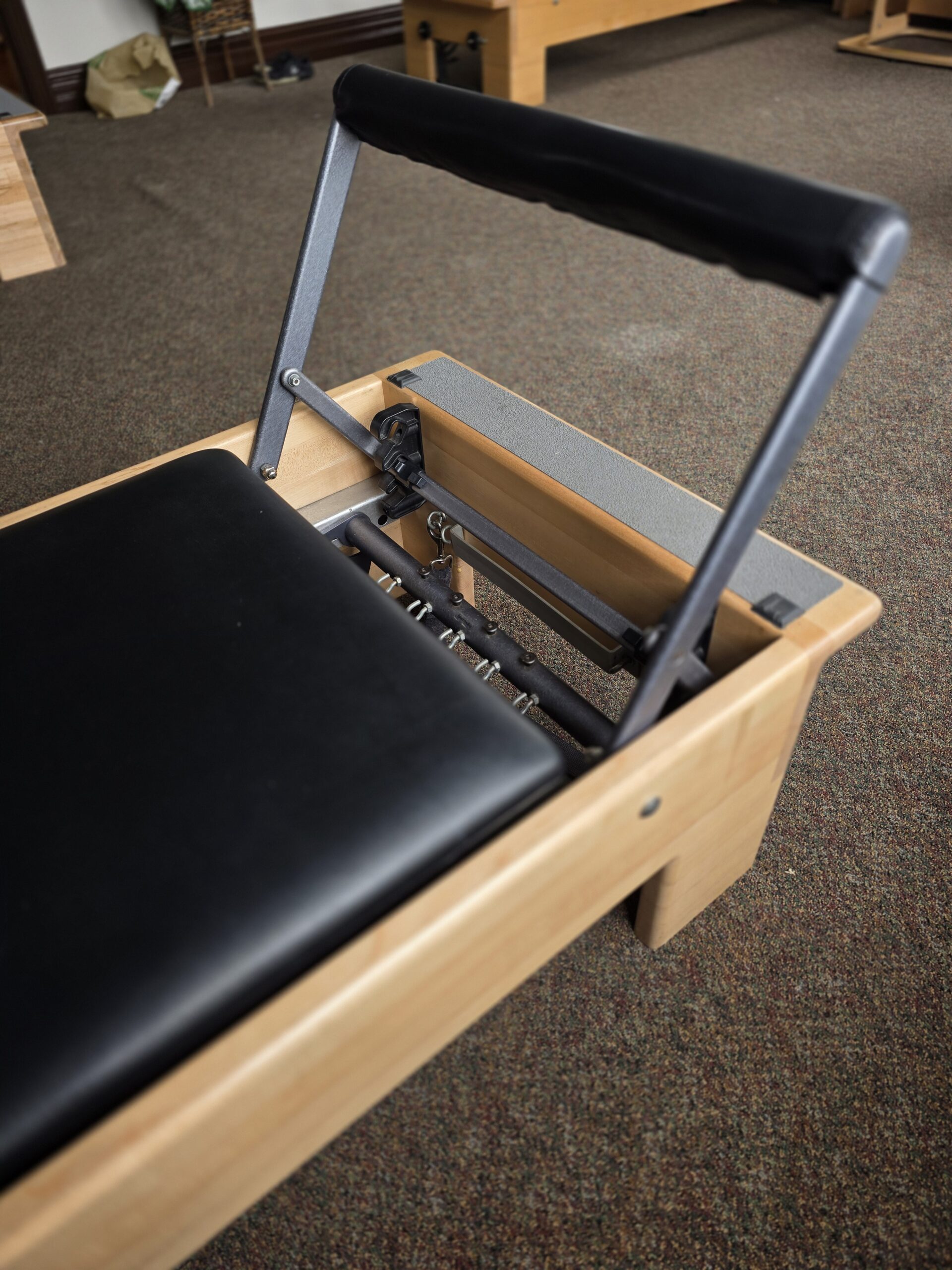
Sessions run at a 4:1 ratio — small enough that your practitioner watches how your body specifically moves and adjusts in real time. Classes run on the mat and on equipment, like a reformer. Where you start is based on your movement assessment. How you progress is based on what your body demonstrates over time.

This is not a fitness class. The goal is not calorie burn or general conditioning. The goal is a body that moves better — and stays that way.

Ratio 4:1 client-to-practitioner. Real-time adjustments to your movement — not general cues to the room.
Format Mat and reformer-based. Starting level is set by your movement assessment — not by what you think you can do.
Focus Breath, motor control, and progressive load. Not calorie burn. Not general conditioning.
Progression Determined by what your body demonstrates over time — not a fixed schedule.
The Goal A body that moves better. And stays that way.
Core strength Deep stabilizers, not just surface muscle
Flexibility Range of motion through length and control
Posture Alignment that holds outside the studio
Low-impact movement Joint-friendly at any starting point
Injury recovery Progressive load after PT, or instead of returning to what caused it
Body awareness Noticing how you move — and how you could

Start with a movement screening. Find out where your body actually is.

Schedule Your Screening →
Why It Works Differently Than Strength Training

Stronger isn't always better. It depends on what you're strengthening.

If you've been strengthening the area that hurts and the problem keeps coming back — that's not a failure of effort. It's a mismatch between the approach and what's actually driving the problem.

Conventional strength training loads a muscle and asks it to produce more force. That works well when the movement pattern underneath is sound. When it isn't, adding load reinforces the compensation. You get stronger moving compensated.

Clinical Pilates works differently. It targets the movement pattern itself. The sequence your muscles fire in. The role of breath in keeping you stable. The way your nervous system organizes your body under demand.

How Progression Works
Early Low load. Position, breath, awareness. Your nervous system learning that movement is safe.
Building Foundations develop. Load and complexity increase as patterns stabilize.
Measure Progress is how well the pattern holds when tested — not how hard the exercises feel.

Your nervous system learns a new way to produce movement instead of defaulting to what it already knows.

Motor Reprogramming

Strength follows from that process. So does the change that holds.

Clinical Pilates also trains something less visible. Every session asks your attention — not just effort, but direction. Where is your breath? What is your pelvis doing? Most people discover a significant gap between what their body is actually doing and what they assume it is. That awareness builds session by session, and it's part of why the motor changes hold between visits.

Where Clinical Pilates Works Best

If any of these sound familiar,
this is your work.

  • "I did PT. It came back."

    Adults coming out of physical therapy who need progressive loading to hold their gains — and a structured environment to build on them.

  • "It gets better, then returns."

    People with recurring back, hip, neck, or shoulder patterns that improve and return. The pattern is the problem — not the flare-up.

  • "I've been told my core is weak."

    Anyone who hasn't found lasting change through traditional core exercise. Strength without pattern change reinforces the compensation.

  • "I need to start somewhere safe."

    Deconditioned adults who need a low-risk, clinical environment to rebuild movement basics before adding load.

  • "I want to move better, not just more."

    Adults who want movement that builds somatic awareness. The focused attention Pilates requires carries into how you move, respond, and function outside the studio.

  • "I'm active, but something's off."

    High-functioning people who move often but suspect their movement quality is working against them — even when nothing is obviously wrong.

  • "I don't have a problem. I want an edge."

    Athletes and performers who move well and want to move better. Better coordination, more efficient output, less wasted effort — without waiting for something to break first.

If any of those sound like you, your next step is a screening.

Schedule Your Screening →
What to Expect

Before you walk in, here's what the work looks like.

First Visit
Movement screening

Your first session is an assessment. We find out where you are before we decide where to start.

Format
Private & small group

Sessions run one-on-one or in small clinical groups — not open enrollment fitness classes.

Frequency
Prescribed per plan

Your frequency is determined by your assessment and goals — typically 1–3 sessions per week in the early phase.

Re-evaluation
Every 12 weeks

Members are re-evaluated quarterly. Your prescription adjusts as your body changes.

Available Sessions

Find a time that works.

View full schedule →

How It Fits the WBS System

The assessment tells us what your body needs. Your preferences shape how we get there.

Your movement assessment reveals where your body actually is — not where you assume it is, and not where it was before compensation set in. From there, we can tell you what change requires.

That part is clinical. Tissue adaptation has requirements. If your assessment shows something that needs to be addressed before Pilates can build on it, that's what we'll tell you — honestly, and specifically.

What can flex is how you meet that requirement. No interest in massage? We look at what else serves the function. Only want Pilates? We'll be clear about what Pilates can do for your picture — and where its limits are. Your preferences shape the path. They don't change what the path has to accomplish.

What the Assessment Determines

The clinical requirement — what your body needs to create the change you're after. This is where the biology speaks, not the preference.

Where Your Preferences Matter

The path to meeting that requirement. Services, format, and schedule can flex. The standard they have to meet doesn't.

How It Evolves

Members are re-evaluated every twelve weeks. As your body changes, the requirement changes — and so does the plan.
Common Questions

Things people ask before they book.

How is Clinical Pilates different from a regular Pilates class?

In a standard class, instruction is generally directed at the group — cues apply to everyone, and modifications are limited. At WBS, Clinical Pilates runs at a 4:1 ratio, which means your practitioner is watching how your body specifically moves, adjusting in real time, and giving directions that apply to you — not the room.

The other difference is the starting point. Your program is built from your movement assessment. What you work on, how you progress, and what you're working toward is specific to what your body shows us — not a general curriculum.

I'm not dealing with pain. Is Clinical Pilates still relevant for me?

Yes. Pain is one reason people come here. Performance is another. Most people who move regularly are doing so with compensations they're not aware of — patterns that limit results and eventually cause problems.

Either way, the work is the same: address the coordination underneath the movement. And because we run at a 4:1 ratio, that work is specific to you — your pattern, your starting point, your goal. You're not getting a general class with a few modifications. You're getting a session built around what your body actually shows us.

What happens at my first session?

Your first visit is a movement screening. We look at how your body actually moves — not how you think it moves, and not how it moved before years of compensation set in.

From there we determine your starting level, your frequency, and what else in the system would support the change you're after. You don't start class on day one — you start with clarity.

What's the difference between Clinical Pilates and Mat Classes?

The primary difference is the equipment. Mat Pilates uses your bodyweight — and because load can't be adjusted, only positions can, it's often harder than people expect. The reformer uses spring resistance that can be dialed up or down, which allows more precise loading for your specific starting point.

Both are assessment-based here. Which one you start with depends on what your movement screening shows — not on which sounds easier.

How long before I notice a difference?

It depends on two things: how often you come, and what your assessment reveals. Frequency matters — a body that shows up once a week adapts more slowly than one that shows up three times. The starting point matters too — how established the compensation pattern is, whether structural work is part of the plan, how your nervous system responds.

That said, most clients notice something in the first few sessions — not strength, but awareness. How they sit, how they carry tension, how they respond to stress in the body. The deeper changes take longer. We re-evaluate every twelve weeks so nothing is assumed — it's measured.

Do I need any Pilates experience to start?

No. Your starting point is determined by your movement assessment, not by your prior experience. Some clients with years of Pilates behind them start at a more foundational level than they expect. Some complete beginners progress quickly.

Experience tells us what you've been doing. The assessment tells us what your body is actually doing.

Two Layers. Two Different Tools.

Understanding the difference matters.

There are two ways the body holds patterns. Clinical Pilates works directly on one of them. The other requires a different approach entirely.

Layer One  ·  Clinical Pilates Works Here
The Movement Layer

How your nervous system sequences and organizes motion. The firing order of muscles. The role of breath in stability. This is what Clinical Pilates works on directly — and where motor reprogramming takes place.

Layer Two  ·  Structural Work
The Structural Layer

How your connective tissue is physically arranged through your body. Years of compensation, old injuries, and chronic tension live here. Pilates builds on structural change, but it does not create it. When structural work is part of your plan, it runs alongside Pilates.

See Rolfing® Structural Integration →

Each addresses what the other cannot. The result is change that goes deeper than either produces alone.

Questions answered. Ready when you are.

Schedule Your Screening →
From Clients
★★★★★

"Wise Body Solutions changed my life. I've had chronic lower back pain for years — consulted multiple chiropractors, my PCP, even tried acupuncture — and found little relief. With treatment and advice from Kristin, I have greatly improved. Better sleep, better posture, less pain, and a happier me."

Nikki — Google Review
★★★★★

"Kristin is not only incredibly knowledgeable, but also incredibly effective. I have never experienced this kind of work before and I am already experiencing a big difference in my hip and neck. Her approach is professional and her office is comforting. Highly recommended."

Dr. Kyle — Google Review

Start with a
movement screening.

It tells us what your body needs — and whether Clinical Pilates is where we begin, or where we're building toward.

Questions first? Email the clinic.

Scroll to Top